
Wastewater profile
Flow, hourly and seasonal variation, pH, COD, BOD, TSS, salinity/TDS, ammonia, oils and industry-specific contaminants.
Engineering scope before equipment list
A process route should be built from wastewater data, site constraints, recovery targets and concentrate handling—not from a generic equipment catalogue.
Typical project drivers
Upgrade existing treatment where variability, salinity or difficult organics prevent stable compliance.
Recover usable water while controlling membrane fouling, concentrate volume and operating cost.
Evaluate segregation, pretreatment, membrane concentration, evaporation or crystallisation based on the full mass balance.

Required project evidence
Missing data is recorded as missing—not filled with assumptions.
Flow, hourly and seasonal variation, pH, COD, BOD, TSS, salinity/TDS, ammonia, oils and industry-specific contaminants.
Current process, equipment condition, actual performance, sludge handling, utilities and available space.
Discharge standard, reuse quality, recovery target, concentrate disposal and client responsibility.
Equipment supply, civil works, installation, commissioning, consumables, operation support and local permits.
Water reuse planning
A reuse concept must explain where every water and salt stream goes.
| Stage | Engineering question | Output |
|---|---|---|
| Segregation | Can high-strength or high-salt streams be separated at source? | Lower treatment load and clearer mass balance |
| Pretreatment | What must be removed before membranes or advanced treatment? | Stable feed quality and fouling control |
| Recovery | What recovered-water quality and volume are actually usable? | Defined reuse point and recovery target |
| Concentrate | Who manages the remaining salt and concentrate stream? | Client disposal, further concentration or full treatment scope |
| Validation | What sampling, testing or pilot work is needed? | Confirmed design basis and quotation assumptions |
Priority sectors
Pickled foods, high-salt processing, beverage production, ingredient and cleaning wastewater.
Variable composition, high dissolved solids and difficult-to-treat industrial streams.
Colour, salts, metals and process chemicals that require source-specific treatment.
Central treatment, tenant variability, expansion planning and reuse infrastructure.
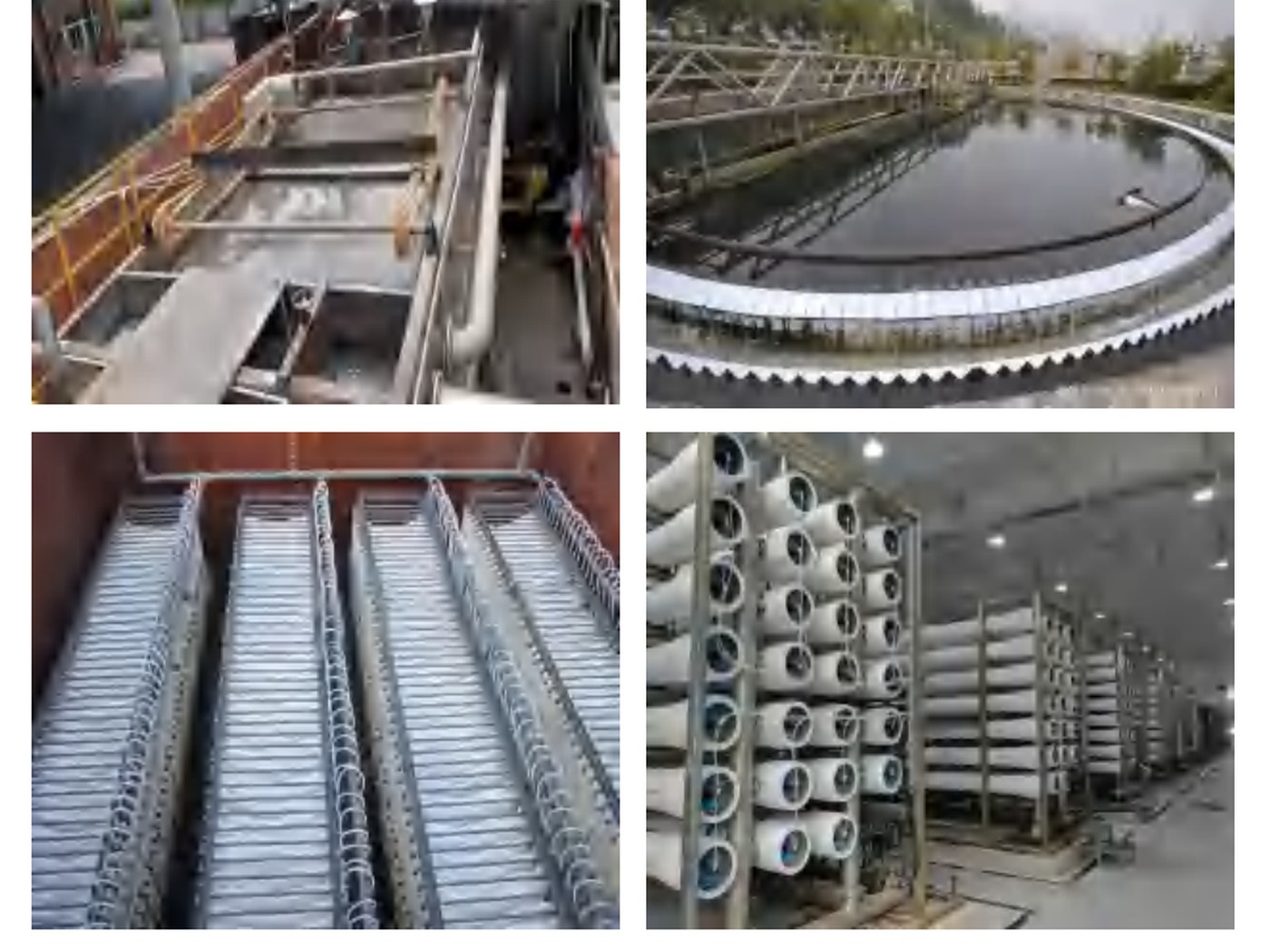
Selected technical reference
The supplied catalogue lists raw COD above 9,000 mg/L, conductivity above 30,000 µS/cm and a process route of air flotation, biochemical treatment, MBR and reverse osmosis.
Share the industry, wastewater volume, available test data, current process and target standard.
Buyer preparation resources
Use a distributor, commercial-project or industrial-project checklist.